Peer Review Process
EDITORIAL GOVERNANCE, PEER REVIEW AND QUALITY INDICATORS
The Revista Jurídica do Nordeste Mineiro — RJNM operates under a structured editorial governance model designed to ensure scientific quality, editorial independence, research integrity, transparency, and consistency throughout the publication process.
The journal follows a continuous-submission model and applies defined procedures for editorial screening, external peer review, scientific decision-making, technical production, and publication.
Editorial performance indicators are periodically monitored to support internal quality control and the continuous improvement of the journal's processes.
1. EDITORIAL FLOW AND QUALITY CONTROL
During the most recent completed annual editorial cycle, RJNM processed approximately 220 manuscript submissions.
All submissions are subject to an initial editorial assessment before external peer review.
During the analyzed period:
-
approximately 21% of all submitted manuscripts were rejected during desk review, primarily because of insufficient conformity with the journal's scope, editorial requirements, scientific standards, methodological requirements, or research-integrity criteria;
-
manuscripts approved during desk review proceeded to external scientific assessment;
-
among manuscripts that proceeded to external peer review, approximately 72% were ultimately accepted for publication and 28% were not approved after completion of the scientific evaluation process.
These percentages refer to different stages of the editorial workflow and should not be added as if they represented categories calculated from the same denominator.
2. PEER-REVIEW STRUCTURE
RJNM uses a double-blind peer-review system.
Manuscripts approved during desk review are normally evaluated by at least two independent external reviewers selected according to their scientific competence and expertise relevant to the manuscript.
Authors and reviewers remain anonymous to one another during the review process.
When reviewer reports substantially differ, or when additional scientific assessment is considered necessary, the manuscript may be submitted to a third independent reviewer.
Reviewer recommendations may include:
-
acceptance;
-
acceptance subject to revision;
-
additional revision and reassessment;
-
rejection.
The final scientific editorial decision remains the responsibility of the Editor-in-Chief.
3. EDITORIAL DECISION-MAKING
Editorial decisions are based on:
-
scientific merit;
-
originality;
-
relevance to Law and Legal Studies;
-
methodological quality;
-
consistency of legal and scientific reasoning;
-
research integrity;
-
reviewer reports;
-
authors' responses to requested revisions;
-
conformity with RJNM's editorial policies.
Financial, institutional, or commercial considerations do not influence scientific decisions.
Article Processing Charges, where applicable, are requested only after final acceptance and remain independent from the peer-review and editorial decision-making processes.
4. EDITORIAL TIMELINESS
RJNM monitors editorial timelines as part of its internal governance and quality-control procedures.
During the most recent annual cycle:
-
the typical time from submission to first editorial decision was approximately 10 to 20 days, depending on manuscript complexity, reviewer availability, and the need for additional assessment;
-
among manuscripts ultimately accepted for publication, the internally monitored time from submission to final acceptance was approximately 16 days.
These figures represent observed editorial performance and are not guarantees of future processing times.
Actual timelines may vary according to:
-
manuscript complexity;
-
availability and response time of reviewers;
-
number and extent of revisions requested;
-
need for a third reviewer;
-
ethical or methodological issues requiring additional assessment.
Editorial efficiency must not compromise the quality or independence of scientific evaluation.
5. INTERNATIONALIZATION
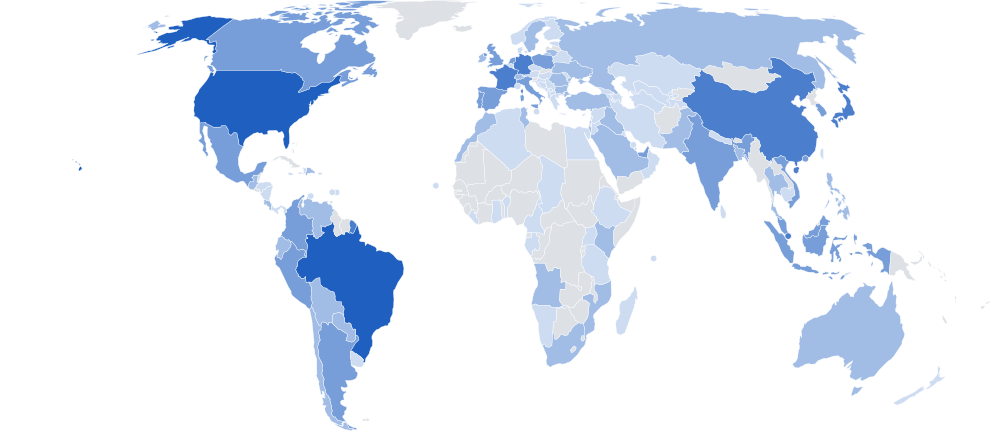
RJNM maintains an internationalization strategy aimed at expanding the geographical diversity and scholarly circulation of legal research.
Current initiatives include:
-
participation of researchers affiliated with institutions in different countries in editorial and advisory structures;
-
publication of authors affiliated with different geographical regions;
-
acceptance and encouragement of manuscripts with international and comparative perspectives;
-
availability of titles, abstracts, and keywords in internationally accessible languages;
-
monitoring of institutional and geographical diversity among authors;
-
development of academic cooperation with researchers and institutions outside Brazil.
Internationalization is pursued as a component of scientific quality and scholarly exchange and does not alter RJNM's disciplinary identity as a journal specialized in Law and Legal Studies.
6. SCIENTIFIC AND TECHNICAL QUALITY STANDARDS
Before publication, manuscripts undergo technical and editorial verification that may include:
-
originality and similarity screening;
-
verification of conformity with the journal's scope;
-
scientific and methodological assessment;
-
peer review;
-
metadata quality control;
-
author identification and ORCID verification, when available;
-
DOI verification;
-
bibliographic-reference checking;
-
language and structural verification;
-
technical preparation of the final publication.
Published articles are expected to provide adequate metadata, including English-language information required for international scholarly discovery.
7. RESEARCH INTEGRITY
RJNM maintains policies addressing:
-
authorship and contributorship;
-
conflicts of interest;
-
plagiarism and research misconduct;
-
citation integrity;
-
responsible use of Artificial Intelligence;
-
ethical oversight;
-
corrections;
-
errata;
-
expressions of concern;
-
retractions;
-
complaints and appeals.
Suspected cases of misconduct are evaluated in accordance with the journal's publicly available publication-ethics policies.
8. EDITORIAL INDEPENDENCE
RJNM's scientific editorial decisions are independent from the publisher's commercial, administrative, and financial activities.
The Editor-in-Chief holds final responsibility for manuscript acceptance, revision, or rejection, with support from the journal's scientific editorial structure and independent reviewer reports.
Members of the editorial team, advisory boards, or reviewer pool who have an actual, potential, or perceived conflict of interest must recuse themselves from the relevant manuscript.
9. CONTINUOUS QUALITY IMPROVEMENT
RJNM recognizes that the growth of editorial activity must be accompanied by proportional strengthening of:
-
scientific governance;
-
reviewer management;
-
research-integrity controls;
-
metadata quality;
-
editorial transparency;
-
internationalization;
-
monitoring of editorial indicators.
For this reason, the journal periodically reviews its editorial procedures, policies, performance indicators, and scientific governance structure.
The objective is to maintain a publication process that combines scientific rigor, transparency, editorial independence, responsible timeliness, and alignment with internationally recognized good practices in scholarly publishing.